Wednesday, November 28, 2018

Where the While Things Are

Where the Wild Things Are

Author: Maurice Sendak
Illustrator: Maurice Sendak
Grade Level: 1-4
Genre: Fiction 
Awards: Caldecott Medal

Summary: This is the story of a young boy's journey to his imagination.  After being sent to his room with no dinner, this boy decides to take a long journey to another world where he will be loved and appreciated.  Once he is there, he feels loved and welcomed by the "wild things."  The boy is soon elected to be their leader.  After a while, the boy grows weary and decides to go back home.  Once he is home, he finds a bowl of soup on his dresser, still hot.  He then realizes how much he is loved and appreciated by his mother.

Evaluation: This was another great book.  Even though a lot of middle school students might have read this when they were younger, it is still a fun book to revisit.  This is one I plan to use in my classroom.  The story is sweet and the illustrations are amazing!

The age appropriateness is between first and fourth grade.  There are very few words on each page and the vocabulary is easy to read and understand. 

I can use this book when talking about an author's craft.  This book would be an example of an author using both written word and illustration to tell his story.  After we look at this book, students can then make their own picture story book.

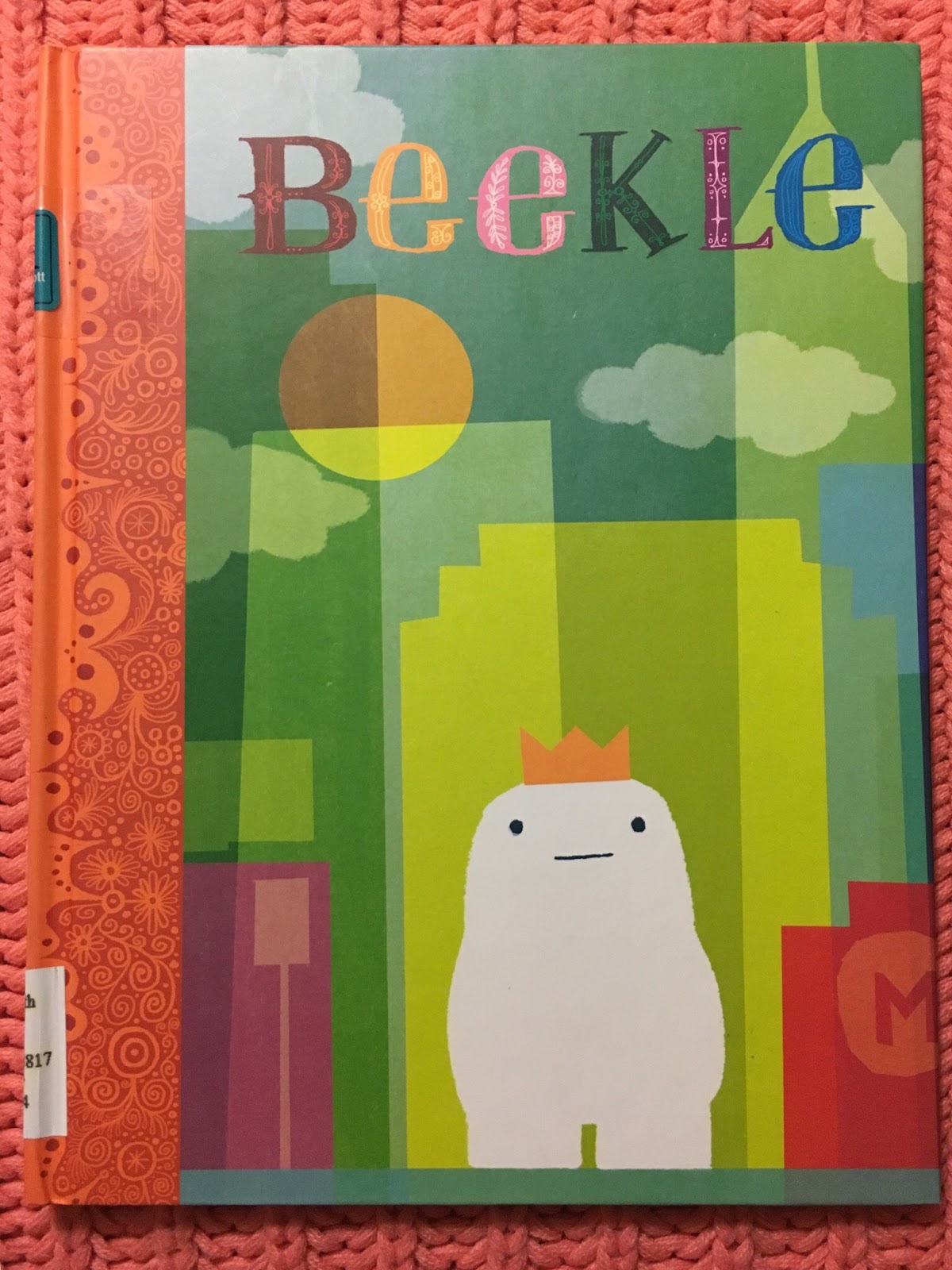
The Adventures of Beekle: The Unimaginary Friend

The Adventure of Beekle: The Unimaginary Friend 

Author: Dan Santat
Illustrator: Dan Santat
Grade Level: 1-5
Genre: Fiction 
Awards: Caldecott Medal

Summary: This tells the story of an unimagined friend.  As this character waits to be imagined, he sees that most of his other friends have been imagined.  He is soon left unimagined.  He decides to search for his friend.  As he enters the world, no one takes notice to him.  He is invisible.  As he waits in a tree, a young girl approaches him.  The fact that she can see him means she has imagined him.  They soon become friends and she gives him the name Beekle.  At the end, the two are shown enjoying life together as friends

Evaluation: This was the cutest book!  It brought back so many memories from my own childhood.  I connected closely with this book.  Even though most middle school students no longer have imaginary friends, most of them had one at one time.  I think they would enjoy the story and the illustrations.  This is definitely a book I will use in my classroom.

The age appropriateness is between first and fifth grade.  The words used are easy to read and understand.  There didn't seem to be any vocabulary words that might be unfamiliar to younger students. 

I would use this book for a creative writing activity.  I would read the story to the class and have them write their own story explaining what might happen to imagined friends once their "imaginer" is older.

Show Way

Show Way 

Author: Jacqueline Woodson
Illustrator: Hudson Talbott
Grade Level: 3-5
Genre: Non-Fiction/Biography 
Awards: Newbery Medal

Summary: This book begins telling the story of a woman.  As the book continues, the reader is introduced to that woman's daughter, granddaughter, great granddaughter, etc.  As the generations go on, the woman's life still leaves an impression on the lives of those after her.  They all bear the marks she received and continue her journey to freedom.  At the end, the reader is introduced to the last woman in the family line - the author herself.

Evaluation: I loved this book.  This is one I plan to have on my classroom bookshelf.  It isn't just the story that's being told, but the way the story is being told.  The author tells her ancestors stories in a simple, short ways that help show the bigger picture.

The age appropriateness is between third and fifth grade.  The story itself is easy to read and follow along.  The illustrations play a vital role in this story.  The vocabulary is clear and easily understood.

I would work with the history teacher when reading this book.  I think this book would have a lasting impact on the students.  You could read this in English class during the time they learn about slavery in history class (cross-curricular teaching).  After doing a read aloud with this book, students could then do a writing assignment on this book explaining why they think the author chose to tell the story over multiple generations and how that played a role in the overall purpose of the book.

Beautiful Blackbird

Beautiful Blackbird 

Author: Ashley Bryan
Illustrator: Ashley Bryan 
Grade Level: 2-4
Genre: Fiction 
Awards: Coretta Scott King Award for Illustrators

Summary: Every bird is amazed by the beauty of the blackbird.  They see true beauty and uniqueness in blackbird and decided that they too want black in their feathers.  The blackbird begins painting different designs on the other birds to add more diversity to their coloring.  Once blackbird adds the black designs on them, they feel more beautiful than ever.

Evaluation: This was a neat story.  There are so many lessons that can be taught using this book.  Where younger students might get a simpler meaning from this book, older students might find deeper meaning.  I would love to have this book in my classroom library. 

The age appropriateness is between second and fourth grade.  The author uses repetition throughout the book as well as vocabulary that is easier to understand.

You could use this book in a read aloud and have students write down what message they got from the story.  Student could then compare and discuss similarities and differences between the messages they got from it.

Sunday, November 25, 2018

How the Peacock Got Its Feathers

How the Peacock Got Its Feathers 

Traditional Latin American (Mayan) Tale retold by Sandy Sepehri 
Illustrator: Brian Demeter 
Grade Level: 2-6
Genre: Traditional Literature 
Awards: none

Summary: This story tells the Mayan tale of how the peacock got its beautiful feathers.  Within this etiological myth is the message of humility.  One bird became so caught up in becoming the new leader of their village that they allowed pride to influence their actions.  They stole the current leaders headdress in order to show that they were the most worth bird to lead.  The peacock warned this bird of their wrongdoing and encouraged them to return the headdress.  When the leader found out, he took back the headdress and turned the bird into a bland bird lacking any color as a consequence.  Because the peacock showed the most conviction and humility, the leader decided to award the peacock with a beautiful tale of feathers.

Evaluation: This was a good, quick read.  It was interesting to read the Mayan's tale on why a peacock has such beautiful feathers.  This is a book I might try to have on my shelf because a lot of students seem fascinated by mythology in middle school.

The age appropriateness is between second and sixth grade.  The vocabulary isn't too difficult and the book includes definitions of unique words used in the story.

You could use this book when discussing different works of mythology.  You could show the different myths people believed and how the tale/myth was told first through oral tradition.  You could also use this book when introducing the term "etiological myth."

Harvesting Hope: The Story of Cesar Chaves

Harvesting Hope: The Story of Cesar Chaves   

Author: Kathleen Krull
Illustrator: Yuyi Morales 
Grade Level: 3-6
Genre: Biography  
Awards: Jane Addams Children's Book Award for Picture Book, Pura Belpre Award (2004)

Summary: Harvesting Hope is about Cesar Chaves and his fight for migrant farm-workers.  Growing up, he saw firsthand the harsh conditions and mistreatment his family and others faced.  As he got older, Cesar Chaves decided to take a stand for the rights of migrant farm-workers.  He lead a peaceful march in protest of the reality many faced.  His march made an impact on thousands of lives affected by similar conditions he faced as a migrant farm-worker.

Evaluation: I was not only moved by the written words of this story, but by the illustrations.  When a powerful story is able to be told well artistically, it is even more impactful.  I enjoyed the way Cesar Chaves' story was told in this book.  This is a book I would enjoy having on my classroom shelf.

The age appropriateness is between third and sixth grade.  Even though the topics discussed in the book are about mistreatment of people, Kathleen Krull explains it in a way that's appropriate for younger students. 

After doing a read aloud with this book, students could discuss and write reflections on the events that took place and how Cesar Chaves' was able to make a difference.  You could plan this read aloud during the anniversary of Chaves' protest march.  

Saturday, November 24, 2018

Malala's Magic Pencil

Malala's Magic Pencil  

Author: Malala Yousafzai
Illustrator: Kerascoet
Grade Level: 3-6
Genre: Non-Fiction 
Awards: Jane Addams Children's Book Award Winner, Nonfiction Capitol Choices 2018, Goodreads Choice Awards 2017

Summary: This book is about Malala Yousafzai and the power her voice has had on the world.  Malala explains what life was like in the place she grew up and the things she dreamed would be changed.  She then tells how she was able to make a difference using her voice.  A single pencil had the power to change the world when it was in the hands of one willing to stand up for something they believed in.  At the end, Malala tells the reader that they too can make a difference.

Evaluation: I loved this book.  Malala was able to tell her story in an appropriate way for younger students.  Her book helps inspire and encourage students.  It shows that they too can make a difference.  This is a book I plan to use in my future classroom because there are so many lesson plans you can make from this book.

The age appropriateness is between third and sixth grade.  Malala tells her story using vocabulary appropriate for younger readers.  The illustrations do a powerful job at telling the story along with the words on the page.

I was actually able to see this book used in a classroom.  The teacher used this book to teach inference and the power of writing.  She made the book applicable by teaching it during Women Appreciation Month.  The students loved the read aloud and enjoyed coming up with things they could write about to help change the world.